Mostrando entradas con la etiqueta Cultura. Mostrar todas las entradas

sábado, 2 de mayo de 2015

«¿Quién amamantó a Rómulo y Remo? ¿Una loba de cuatro patas... o de dos?»

ENTREVISTA / VIRGILIO ORTEGA, AUTOR DE «PALABROTALOGÍA»

Virgilo Ortega explora el significado de las palabras actuales y se remonta miles de años atrás, aunque advierte que «toda investigación etimológica conduce a un fracaso»

Por Alec Forssmann

Virgilio Ortega, de 70 años, acaba de publicar Palabrotalogía, sobre la etimología u origen de las palabrotas o palabras malsonantes que son tan habituales hoy en día. Editor durante décadas en editoriales barcelonesas como Salvat, Orbis, de la que fue uno de sus fundadores, Plaza & Janés y Planeta DeAgostini, este apasionado de las palabras antiguas ya publicó el año pasado Palabralogía, una obra mucho más genérica, como evidencia su título. "En 2014 se convirtió en el libro de no ficción más vendido en Colombia... Incluso por delante del libro sobre Pablo Escobar, el narcotraficante colombiano", ríe Ortega mientras explica un sinfín de historias y anécdotas durante esta entrevista, plagada de palabras explícitas. Ortega conoce siete idiomas (castellano, catalán, inglés, francés, italiano, latín y griego) e incluso escribe en cuneiforme y en egipcio antiguo.

Hay palabras realmente antiguas.

Me gusta remontarme muy atrás en el tiempo. ¿Cómo se decía "gato" en egipcio? Con la onomatopeya "miw" o "miu". Y la palabra "faraón" viene del egipcio a través del hebreo. Los judíos usaban la palabra "per-aa", que significa "casa grande", y por metonimia se usó para designar al faraón.

Se nota una cierta candidez en esas palabras.

Más de 3.000 años de historia egipcia y sólo nos ha llegado una cosa que es el Papiro Erótico de Turín, donde se representan todo tipo de escenas sexuales. Que sólo se conserve un papiro demuestra que la sexualidad era natural para ellos y no les daba vergüenza.

No había pecado.

La vinculación de la sexualidad con el pecado es un mecanismo de supervivencia del pueblo hebreo. Los judíos vagaron cuarenta años por el desierto. ¿Te imaginas a miles de personas por el desierto? Estaban condenados a extinguirse y por eso la sexualidad debía estar orientada a la fecundación de la mujer para procrear la especie. ¡Por eso la masturbación es pecado! Porque estás masturbándote en vez de fecundar a tu mujer. La concepción del pecado viene de la tradición judeocristiana.

¿Y qué me dice de la Antigua Grecia?

En Grecia había prostitución sagrada. Si vas a Grecia sube al Acrocorinto, donde había mil putas sagradas: la sexualidad elevada a la categoría de religión.

¿Putas sagradas al servicio de quién?

De los sacerdotes y del pueblo, de los ritos, de las ceremonias y de los dioses. "Porné" significa "puta" en griego y "porné grafein", la pornografía, es el grabado de las putas, las representaciones de los actos que se hacen con las putas.

¿Eran muy promiscuos?

Había homosexualidad, dioses follando con todas las mujeres y follando entre ellos. Zeus poniéndole los cuernos a su mujer Hera y ella poniéndoselos con otro. ¿Qué es Leda y el Cisne?

¿Un mito griego?

Es Zeus que se ha transformado en cisne para follarse a Leda. Y ¿qué es el rapto de Europa?

Sorpréndame.

Europa era una princesa fenicia de las costas del actual Líbano. Zeus la ve y piensa: "Qué buenorra está esa tía". Entonces se transforma en un toro blanco, guapísimo, y los dos se enamoran. Ella se monta encima de él y vuelan hasta Creta. Así nace Europa, que significa la de los "ojos anchos".

Las palabras tienen significados ocultos.

El amor. Siento un amor enorme por mi nieta de tres años, pero al mismo tiempo siento un amor enorme por mi pareja. ¿Que siento el mismo amor por mi pareja que por mi nieta? ¿Y encima puedo hacer el amor con una ramera que me encuentro por la calle? ¿Qué está pasando aquí? ¿La misma palabra para el cariño que siento por mi nieta y para una tía con la que hago el amor?

Así es.

Los griegos usaban varias palabras para diferenciar una cosa de la otra. El "eros" designa lo erótico, el amor físico, el "ágape" designa el cariño y la "filía" la amistad.

Cuánta riqueza expresiva.

En la Última Cena Jesús le pregunta a Pedro: "¿Me amas más que estos?". ¿En qué sentido? Se refiere al "ágape": "Pedro, ¿tienes cariño por mí? ¿Me quieres?". En el sentido bonito de la palabra, claro. Fíjate qué diferencia, qué sofisticación.

¿El latín sigue presente?

"Domus" es la casa y de ahí viene la "domótica". El compositor Rossini, que tenía un ego enorme, se hizo inscribir lo siguiente en la fachada de su casa en Bolonia: "Non domo dominus, sed domino domus". Es decir: "No es el señor para la casa, sino la casa para el señor". Eso se lo digo a todos los arquitectos...

¿Y qué palabras han perdido su significado original?

"Magis" en latín es "más" y "minus" es "menos". El magister era el esclavo que más sabía y, por tanto, se le podía confiar la educación de los hijos. De ahí vienen "maestro" y "magisterio". En cambio "minister", de "minus", era el que no sabía nada y de ahí viene "ministro".

Es para reírse.

En Grecia, dos médicos no podrían hablar sin las palabras griegas. Orquitis es la inflamación de uno o ambos testículos y ¿qué tiene que ver con la orquídea? Prueba a sacar una orquídea del tiesto y verás que debajo tiene dos cojones. Este nombre se lo puso Teofrasto, el principal discípulo de Aristóteles, que era un gran naturalista. "Orquídea" significaría "la cojonuda", "la que tiene forma de cojones".

¿De dónde viene esta palabra?

Del griego "koleós" y del latín "coleus", que es "bolsa", "cuero" o "escroto". El primer tomo del Diccionario secreto de Camilo José Cela se titula Series coleo y afines. Cela está hablando de una palabra: la palabra "cojón".

Antes hablaba de las prostitutas.

Sí, en latín tenían más de sesenta formas para decir "puta". "Concubina", por ejemplo, viene de "concubare", "con la que te acuestas". "Culiola" era la que ofrecía coito anal. "Diobolaris" era la que sólo costaba dos óbolos, tenía un precio muy barato, te la podías tirar por cuatro perras. La madre de Cicerón le decía: "... nam me ad famosas vetuit mater accedere". Es decir, "mi madre me prohibió que me fuera con las famosas". ¿Quiénes eran las famosas? ¡Las putas!

¿Qué más?

¿Qué tiene que ver la hornacina, donde pones una virgen, con el fornicar con una puta? Los arcos bajos que hay en el Coliseo se llaman "fornix" y el plural es "fornices". De ahí viene "fornicar", que era lo que hacían las putas en el Coliseo. ¡Ah! ¿Y quién amamantó a Rómulo y Remo?

¿Una loba?

En aquella época había abandono de niños y una loba ¡se los merendaría! "Lupa" era una de las formas para decir "puta". ¿Qué es el lupanar de Pompeya? Donde trabajaban las putas, las lobas. ¿Quién amamantó a Rómulo y Remo? ¿Una loba de cuatro patas o una lupa de dos patas? Era humana, buena persona, los recogió y les dio de mamar. Pero luego llegan los romanos y en una operación de marketing muy clara piensan: "¡No vamos a decir que somos unos hijos de puta!". Entonces se inventan la historia de la loba, que es de origen etrusco.

¿Con qué otras palabras se designaba a una puta?

"Meretrix", la meretriz, tiene que ver con el verbo "mereo", por tanto es la que se lo merece, la que se lo ha trabajado; respétala y págala porque se lo merece. ¡Fíjate qué bonito! Todavía permanecen estas huellas en nuestro lenguaje. "Femina" era la respetable y "mulier", la mujer, que ha originado palabras como "mujerzuela" o "mujeriego". Podríamos decir: "Soy mujerista en vez de feminista". Pero no, todo lo feminista es bueno y todo lo relacionado con mujer es malo. Nos viene de hace 2.000 años. O, por ejemplo, "culibonia", la que tiene buen culo o un culo respingón.

¿Cuáles son las más hirientes?

Me jode mucho la palabra "vagina". El gladiador se llamaba así porque tenía una espada corta, el gladius. De hecho, ¿qué forma tiene la flor del gladiolo o gladiolus? Es como una espadita. El gladius era un arma que se metía en una vaina, la vagina. ¿Qué es la vagina? El sitio donde metes el pene, o sea, la vagina no está concebida por sí misma sino en función del pene. ¡Es una palabra maldita!

¿Por qué suenan tan bruscas las palabrotas en castellano?

¿De dónde coño viene la palabra "coño"? ¿Qué tiene que ver el coño con el conejo? ¿Qué tiene que ver el coño con las conejitas Playboy? Las dos enes en latín se transforman en una eñe castellana: "annus" se convierte en "año", pero "anus" pasa a ser "ano". ¿Qué es un "anulus"? Un anillo. ¿Qué es un anillo? Un ano pequeño, un anito. "Cunnus" se convierte en "coño". "Cunniculus" primero era la madriguera, con el tiempo pasa a designar el contenido, "conejo", y luego eso peludo que tienen las mujeres. De ahí las conejitas de Playboy.

¿Y "joder"?

Del latín "fotere". La raíz latina se ve claramente en el catalán "fotre" y en el gallego "foder". El catalán conserva más el latín y el castellano evoluciona más. No es ni bueno ni malo, simplemente es así.

¿Alguna palabra bonita?

"Piropo" significa "rubí" en griego. A las mujeres les digo: "Que no te digan un piropo, ¡que te lo den!".

¿Y qué me dice de la influencia árabe del castellano?

El "puente de Alcántara" es una redundancia. "Al-cantara" ya significa "el puente". O sea que estás diciendo "el puente del puente". O por ejemplo "aran", que en vasco significa "valle". El "valle de Arán" es "el valle del valle".

¿Alguna palabra muy antigua?

"Zoco" viene del árabe "suq", que a su vez designaba la plaza del mercado en Mesopotamia. La palabra pasa a los árabes, después a los hispanoárabes y después a nosotros. Pero no podemos retroceder más porque la escritura se remonta a unos 5.000 años. Si no hay escritura no lo podemos documentar. Por eso toda investigación etimológica conduce a un fracaso.

Unas palabras se quedan y otras se pierden.

Y a veces se mantienen dos. ¿Qué diferencia hay entre una oliva y una aceituna? ¡Son exactamente lo mismo! "Oliva" viene del latín "oleus", que es aceite, y "aceituna" viene del árabe "as-sutuna", "la aceituna".

¿Y los neologismos?

Hemos asistido al nacimiento de palabras, por ejemplo la "azafata" de un vuelo. "Safat" significa "bandeja" en árabe y "as-safat" es "la bandeja", es decir, por metonimia la bandeja pasa a designar a la muchacha que la lleva. O la palabra "mileurista", que es genial y hace veinte años no existía. La Real Academia Española se limita a registrar estos cambios. Los hablantes somos los dueños de estas palabras.

¿Y su nombre de dónde viene?

Podría venir de "virgo" porque Virgilio era un poco mariquita, era "virginal". ¿Sabes qué sobrenombre le daban en griego? Le llamaban "Parthénos", la "Virgen" o más bien el "Virginal". "Parthénos" viene de la diosa Atenea, que era virgen. Salió de la cabeza de Zeus, el dios supremo; no nació de una madre ni fue madre. A mí de pequeño me llamaban "Viri", que significa todo lo contrario: varón, machote. ¿De dónde viene mi nombre? Si quieres puede venir de Virgilio el mariquita o del machote y varonazo.

lunes, 8 de septiembre de 2014

Por qué a los chinos se les está olvidando escribir su propio lenguaje


Celia Hatton
Grafiti en chino
Para convertirse en un "Héroe de los Caracteres" en China se necesita sangre, sudor y meses de estudio.
Millones sintonizan cada semana el programa en el que adolescentes compiten por el título.

Pero el desafío en el país asiático es escribir las palabras a mano.El Héroe de los Caracteres es la versión china del "Spelling Bee", el concurso de ortografía estadounidense en inglés, que desde 2011 también tiene una versión en español.
Cada trazo, cada punto tiene que estar en el lugar correcto.
Tras dos tensas rondas, Wang Yiluo queda descalificada; le hace una venia al panel de famosos jueces y sale rápidamente del estudio de televisión.
Tras bambalinas, admite que pasó meses estudiando diccionarios para prepararse. Había mucho en juego pues ya tiene 17 años, así que era el último año en el que podía participar.
"Quería competir antes de ser demasiado vieja", le explica a la BBC.

La razón del olvido

La popularidad del show quizás no debería sorprender: además de la pólvora y el papel, muchos consideran que la creación de la caligrafía china es una de sus principales contribuciones a la civilización.
Competencia televisada
Los jóvenes que participan en el show saben lo que el resto de la población está
olvidando: escribir.
No existe un alfabeto chino. Cada palabra se representa con un caracter o un compuesto de dos o tres caracteres.
Un diccionario chino respetable contiene más de 85.000 caracteres. Se estima que cotidianamente están en uso 7.000.
No obstante, los conocimientos sobre cómo componer esos caracteres están en riesgo.

En todo el país, a la gente se le está olvidando cómo escribir su propio lenguaje sin ayuda computarizada.
Un software en los teléfonos inteligentes y en las computadoras le permite a los usuarios introducir el sonido básico de una palabra usando el alfabeto latino.
Luego se escoge el caracter correcto de una lista.
¿El resultado? Es posible reconocer los caracteres sin recordar cómo escribirlos.

Pincel, tinta y papel de arroz

Pero todavía hay esperanzas para el humilde pincel.
El Ministerio de Educación de China quiere que los niños pasen más tiempo aprendiendo cómo escribir.
Pinceles y letras
El Ministerio de Educación chino está impulsando la escritura.
En una escuela primaria que visité en Pekín, los estudiantes practican caligrafía todos los días en un salón de clase decorado especialmente con pinturas tradicionales chinas en las paredes.
Se escucha una música suave mientras un grupo de niños de 6 años sumergen sus gruesos pinceles en la negra tinta.
Miran el tablero a menudo para estudiar los ejemplos que escribió el profesor antes de intentar reproducir esmeradamente esos caracteres en el delgado papel de arroz.
Escuela en China
Hasta a los profesores de caligrafía se les han olvidado palabras.
Si los adultos pueden sobrevivir sin escribir a mano, ¿para qué molestarse en seguir enseñándolo?, le pregunto a la profesora de caligrafía, Shen Bin.
"La habilidad de escribir los caracteres es parte de la tradición y cultura china", responde.
"Los estudiantes tienen que aprender ahora para que no lo olviden cuando crezcan".
Sin embargo, la misma Shen no puede evitar los efectos de la tecnología moderna.
"Es común, hasta entre profesores como yo, que se olviden ciertas palabras", admite riéndose.
"Aquí estamos todos juntos recordando cómo escribir".

domingo, 31 de agosto de 2014

17 Business Etiquette Rules Every Professional Needs To Know


Professional social situations can be awkward. And, unfortunately, many people wind up making fools of themselves because they don’t understand that etiquette rules in business differ slightly from those in standard social settings. 

In her book "The Essentials Of Business Etiquette," Barbara Pachter writes about the specific rules people need to understand in order to conduct and present themselves appropriately in professional social settings.  

Here are the most important tips on how to introduce yourself, how to dress, and what to order at restaurants from Pachter's book.

Always stand when you're being introduced to someone.

"Standing helps establish your presence. You make it easy for others to ignore you if you don’t stand. If you are caught off guard and cannot rise, you should lean forward to indicate that you would stand, if you could."

Always say your full name.

In a business situation, you should use your full name, but you should also pay attention to how others want to be introduced.

If your name is too long or difficult to pronounce, Pachter says you should consider changing or shortening it. Or you should consider writing down the pronunciation of your name on a business card and giving it to others.

Source: "The Essentials Of Business Etiquette"

Always initiate the handshake if you’re the higher-ranking person or host.

In today's workplace, the host or the higher-ranking person, regardless of gender, should extend their hand first, she writes. "If the higher-ranking person fails to do so immediately — often because of gender confusion — the lower-ranking person should extend his or her hand without missing more than a beat."

Either way, the handshake must happen. "In the United States, the handshake is the business greeting. If you want to be taken seriously, you must shake hands and shake hands correctly."

Source: "The Essentials Of Business Etiquette"

Dress appropriately.

"Clothing, an important form of nonverbal communication, can enhance a person's professional reputation or detract from his or her credibility. You want to send a professional message through your clothing choices," Pachter writes.

Always find out what the dress code is at the event, meeting, or restaurant you're going to and make sure your attire falls within the guidelines.

Source: "The Essentials Of Business Etiquette"

Only say "thank you" once or twice during a conversation.

"You need to say it only once or twice within a conversation. Otherwise, you may dilute its impact and possibly make yourself seem somewhat helpless and needy."

Source: "The Essentials Of Business Etiquette"

Send separate thank-you notes to everyone involved.

You should send thank-you notes within 24 hours and you should send separate notes to everyone you want to thank.

"Before you choose between email and handwritten notes, consider that regular mail may take several days to get to its destination while email arrives almost immediately. This time difference can be important after a job interview, if the hiring decision is being made quickly."

Source: "The Essentials Of Business Etiquette"

Never pull out someone's chair for them.

It's OK to hold open a door for your guest, but Pachter says you shouldn't pull someone's chair out for them regardless of gender. In a business setting, you should leave those social gender rules behind.
"Both men and women can pull out their own chairs."

Don't cross your legs.

Both men and women do it, but it can be distracting and even too sexy for a professional setting, says Pachter.

"The bottom line, however, is health related: crossing your legs is bad for your circulation because it increases the pressure on your veins."

Source: "The Essentials Of Business Etiquette"

Keep your fingers together when you point.

"Point with an open palm, and keep your fingers together. If you point with your index finger, it appears aggressive. Both men and women point, but women have a tendency to do it more than men."

Source: "The Essentials Of Business Etiquette"

Always break bread with your hands.

Pachter says you should never use your knife to cut your rolls at a business dinner. 

"Break your roll in half and tear off one piece at a time, and butter the piece as you are ready to eat it."

Source: "The Essentials Of Business Etiquette"

Don’t order anything too expensive.

If you order an expensive steak or lobster, for instance, you will look like you're taking advantage of your host, Pachter writes. "However, if your host makes recommendations, you can order any of those suggestions, though it's still better not to choose the most expensive." The same goes for wine.

Also be careful when ordering a "special." "Many waiters do not mention the price when telling you their specials of the night. Specials can cost from 10% to 40% more than regular menu items, but you cannot comfortably ask the price of a special in a business situation." You're better off steering clear of the specials.

Source: "The Essentials Of Business Etiquette"

Do not push away or stack your dishes.

"You are not the waiter. Let the wait staff do their jobs." Plus, if the other person (or people) you're dining with aren't yet finished, they may feel rushed — and you may come off as rude.

Source: "The Essentials Of Business Etiquette"

Keep the food options balanced with your guest.

This means that if your guest orders an appetizer or dessert, you should follow suit.

"You don’t want to make your guest feel uncomfortable by eating a course alone," Pachter says.

Source: "The Essentials Of Business Etiquette"

Never ask for a to-go box.

"You are there for business, not for the leftovers," Pachter writes. "Doggie bags are okay for family dinners but not during professional occasions."

Source: "The Essentials Of Business Etiquette"

Know where to properly place plates and silverware.

Remember that "left" has four letters and "right" has five letters.
"Food is placed to the left of the dinner plate. The words food and left each have four letters; if the table is set properly, your bread or salad or any other food dish, will be placed to the left of your dinner plate. Similarly, drinks are placed to the right of the dinner plate, and the words glass and right contain five letters. Any glass or drink will be placed to the right of the dinner plate."
"Left and right also work for your utensils. Your fork (four letters) goes to the left; your knife and spoon (five letters each) go to the right."
Also, think "BMW" when trying to remember where to place plates and glasses. The mnemonic BMW here stands for "bread, meal, and water" so remember that "your bread-and-butter plate is on the left, the meal is in the middle, and your water glass is on the right."

The host should always pay.

"If you did the inviting, you are the host, and you should pay the bill, regardless of gender. What if a male guest wants to pay? A woman does have some choices. She can say, 'Oh, it’s not me; it is the firm that is paying.' Or she can excuse herself from the table and pay the bill away from the guests. This option works for men as well, and it is a very refined way to pay a bill."
"However, the bottom line is that you don’t want to fight over a bill. If a male guest insists on paying despite a female host’s best efforts, let him pay."

Prepare a polite exit.

Pachter says you need to be the one talking as you're making the exit. "Remember to leave when you are talking. At that point, you are in control, and it is a much smoother exit."

You should also have "exit lines" prepared in case you need to leave a conversation. You can say "Nice to meet you" or "Nice talking to you" or "See you next week at the meeting."

You can also excuse yourself for a bathroom break, to get food, or say you wanted to catch someone before they leave.

Source: "The Essentials Of Business Etiquette"

What Is the History of Labor Day?

By Andrea Santiago

Question: What Is the History of Labor Day?
Why do we get a day off on Labor Day? What is the origin of the Labor Day Holiday?
Answer:
According to the Department of Labor, here are a few facts about the history of Labor Day:
  • Labor Day is always celebrated on the first Monday of September.
  • Labor Day was created to recognize the “social and economic achievements of American workers . . . and the contributions workers have made to the strength, prosperity, and well-being of our country,” according to the Department of Labor’s website.
  • The first Labor Day was celebrated in New York City in 1882. Throughout the late 1800s, states and territories followed suit with legislation to officially designate the first Monday of September as the “working man’s holiday”.
  • Labor Day was often celebrated with parades and festivals, and speeches by prominent civic leaders.
  • While there is some debate as to which individual labor union officer initially founded the holiday, most historians agree that it was the Central Labor Union that originally adopted the proposal for Labor Day and planned the first Labor Day celebration.
For more information, visit the official website of the U.S. Department of Labor (DOL).

Labor Day - Why and How We Celebrate

By Randy Duermyer

In America, Labor Day is celebrated the first Monday of each September. Because Labor Day creates a three-day weekend and is the last major holiday before the onset of autumn, it's generally seen as the last chance to enjoy the summer season.

When you think about, the kids are headed back to school (in recent years and in many areas, most kids have to return to school before Labor Day, but that's not how I remember it growing up) the baseball season is coming to a climax and football is about to start. In short, families have come to celebrate Labor Day by going to fairs or parades, having backyard barbecues, going to the beach or on a picnic, and generally doing those things they know will soon be impossible or impractical due to the shortening daylight hours and the ratcheting up of busy schedules.

The three-day Labor Day weekend can be a great opportunity to step away from your home business or work at home job, recharge your batteries and spend some quality time with your family.

Why Do We Celebrate Labor Day?

The original intent of Labor Day was to provide a holiday that would honor the social and economic achievements of American workers. Essentially, it was intended to be, and in may ways remains, an annual national tribute to the contributions workers have made to the strength, prosperity, and well-being of our country. But how did it come about?


There are some disputes about who originally thought of the idea of an annual Labor Day observance. According to the Department of Labor, there is some controversy over whether Labor Day originated as the idea of Peter J. McGuire, general secretary of the Brotherhood of Carpenters and Joiners and a co-founder of the American Federation of Labor, or of Matthew Maguire, a machinist, who later became the secretary of Local 344 of the International Association of Machinists in Paterson, N.J. Isn't it ironic that both who are given credit for starting the Labor Day tradition have the same last name with a different spelling?

When was the First Labor Day?

According to the Department of Labor, the first Labor Day holiday was celebrated on Tuesday, September 5, 1882, in New York City, according to the plans of New York's Central Labor Union. The second Labor Day followed a year later, on September 5, 1883. Labor Day wasn't part of a three-day weekend until 1884, when the first Monday in September was selected as the holiday, as originally proposed by the Central Labor Union, who then urged other labor organizations in other cities to celebrate the holiday on the first Monday of September.

Making Labor Day a Legal Holiday

The first state to enact a bill that would eventually become law to celebrate Labor Day was Oregon on February 21, 1887. Other states jumped on the bandwagon, just a few at first, but more than half of the states adopted the holiday to honor America's workers by 1894. On June 28, 1984 the U.S. Congress passed an act making the first Monday in September a legal holiday in the District of Columbia and the territories. So the idea of a three-day Labor Day weekend was well in place across the U.S. over 100 years ago.

How We Celebrate Labor Day Now

While many still turn out to hear Labor Day speeches and attend parades, the focus of the American worker has turned more to celebrating a day off with family. Is that because labor unions have weakened in the U.S.? Quite possibly, but however you decide to celebrate Labor Day, have fun and take some time away from work to catch up with your family. Autumn fast approaches, and along with it the shorter days and increasing responsibilities of our jobs, our kids and school activities.

Like other holidays, if you have a home business and have been nudging your family aside to pursue your dreams, the three-day Labor Day weekend is a chance to reconnect with your loved ones. Maybe you can take a weekend getaway, or maybe you'd prefer to stay closer to home and avoid the traffic and crowds.

Whatever you decide to do, try to take some time out to help get your work and family life back in balance. Three-day weekends don't come along that often, and we should be thankful that our predecessors and ancestors were determined to make it happen.

sábado, 23 de agosto de 2014

R.I.P. Deborah Sussman, Who Made Graphic Design Larger Than Life

THE SELF-PROCLAIMED "SUPERGRAPHICS" DESIGNER HAS DIED AT AGE 83.

Deborah Sussman, the designer best known for creating the environmental graphics of the 1984 Summer Olympics in Los Angeles, died yesterday after a long battle with cancer. She was 83. 
Sussman often characterized her own work as "supergraphics:" large-scale, brightly colored designs that shaped the built environment and brought the urban landscape to life often more powerfully than architecture itself. "The idea of supergraphics was not that it was just ‘big' but that it was ‘bigger' than the architecture," she said in a 2013 interview with Creative Review. "It didn't have to fit in to prescribed spaces in a traditional way. It could have its own life and go beyond the ceiling, be cropped, be as though it had almost flown over the architecture." That might mean a giant orange star planted on top of a building at the Olympic Arts Festival, or a massive yellow-and-orange X installed on the wall of a department store. The approach has now become mainstream, but in Sussman's time, it was pioneering.
Born in Brooklyn in 1931, Sussman took classes at the Art Students League in Manhattan and studied acting and painting at Bard College. She later graduated with a degree in graphic design from Chicago’s Institute of Design, then run by Bauhaus painter and photographerLászló Moholy-Nagy. Her professional career started at age 22, in 1953, in the offices of Charles and Ray Eames, where she worked on seminalexhibits for IBM (at the 1964 World's Fair), the government of India, and the Ford Foundation before winning a Fulbright Scholarship to study at the Hochschule für Gestaltang, an art and design school in Ulm, Germany.
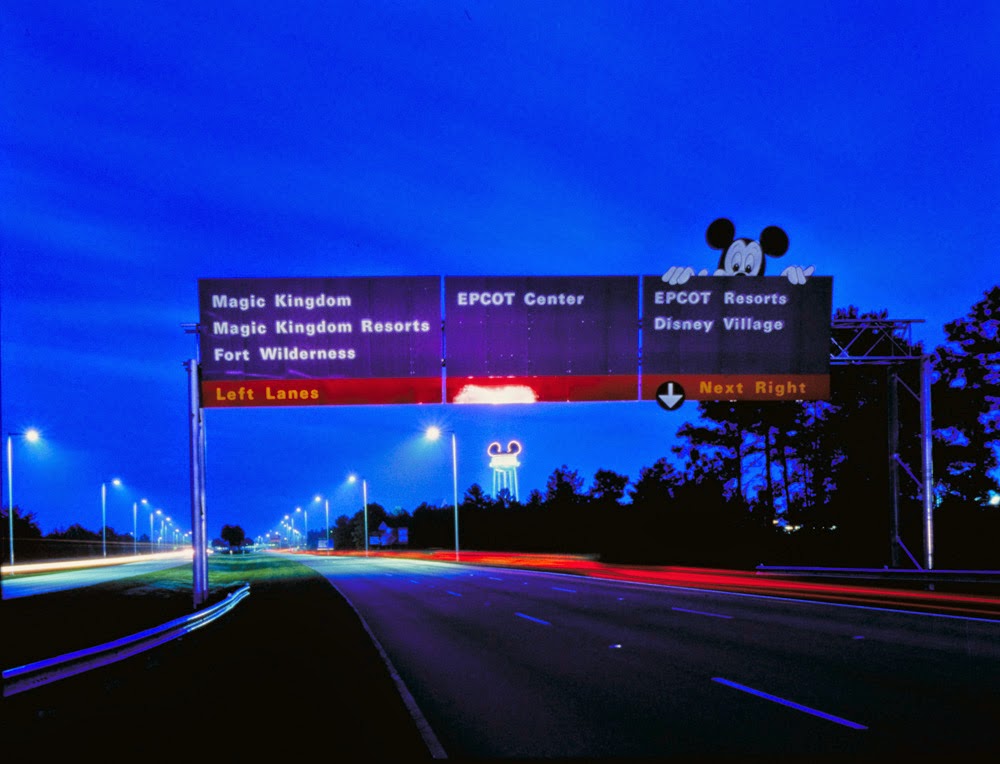
In 1968, she opened her own design practice, and in 1980, she was joined by her husband, urban planner and architect Paul Prezja, in creating Sussman/Prejza & Company. Their “urban branding” projects included city identities for Philadelphia and Santa Monica, as well as wayfinding systems for Walt Disney Resorts and interiors for Hasbro, Inc. She was the first woman to exhibit in New York’s School of Visual Arts’ “Master Series," and in 2004, won the prestigious American Institute of Graphic Arts Medal. 
Sussman was part of a design team that worked on the 1984 Summer Olympics, one of the best examples of her "supergraphics." The team created bold, brightly colored "pop-up" towers, gateways, and walls made from inexpensive scaffolding, upcycled tents, nylon banners, and canopies--cheap replacements for permanent buildings that would be used for the Games, then never again. Instead of the expected national hues of red, white, and blue, the designs were rendered in hot magenta, vermillion, aqua, and chrome yellow, channeling the sun-drenched color palette of Los Angeles and the Pacific Rim. The designs incorporated "pictures of those huge papier-mâché figures made in Asia and Mexico which go up in flames, and bamboo for the scaffolding," Sussman told Creative Review, capturing these cultures' unique "technologies of celebration." "More is more," she sometimes liked to say.
“Several people have told me over the years ‘just give them what they want’ with regards to clients, and I can’t bring myself to do it,” Sussman said in a 2013 interview with Designboom. "I have to inspire them, and that can sometimes be a very dangerous attitude to have because you can lose yourself a lot of money."
Below, a video interview with Sussman, wearing her trademark spectacles, by the Los Angeles Contemporary Art Museum.


Source: http://www.fastcodesign.com/3034682/fast-feed/rip-deborah-sussman-who-made-graphic-design-larger-than-life?utm_source=mailchimp&utm_medium=email&utm_campaign=codesign-daily&position=2&partner=newsletter#1

sábado, 16 de agosto de 2014

10 cosas que hasta ahora no sabías del Louvre

Por Evasion | 14/08/2014 - 15:57

Es muy probable que hayas estado en París y hayas ido al Louvre, pero quizá no hayas reparado en estos detalles. Y si aún no has ido, te adelantamos estas curiosidades para que cuando decidas ir seas todo un experto.

1. El presupuesto anual con el que cuentan es mayor que el precio de 2 millones de maletas de Louis Vuitton.

2. Ya se sabe que este museo es enorme pero, ¿sabes cuánto? En concreto y para que te hagas una idea son 35 campos de fútbol, unos 60 mil metros cuadrados.

3. La entrada cuesta 16 euros. Esto te permite acceder a todas las exposiciones permanentes y temporales.

4. Fue un almacén para los nazis. Sí porque en aquella época necesitaban un lugar amplio donde poder guardar todas las cosas que habían ido robando de museos y castillos durante las anexiones, y qué mejor sitio que el Louvre.

5. La Mona Lisa estuvo colgada en el dormitorio de Napoleón Bonaparte. Antes de que su lugar definitivo fuera este museo de París, estuvo colgada en la habitación de Bonaparte. Después, durante la Segunda Guerra Mundial volvió a ser trasladado a un lugar secreto.

6. El Louvre no siempre se llamó así. Antes de 1800 su nombre no era el actual, sino que lo era 'El Bonaparte' en honor al militar francés.

7. Todo está indicado en francés. Porque como los franceses son 'muy suyos' no te encontrarás con ningún cartel en que te den la bienvenida. De hecho la mayoría de las descripciones están en francés. Eso sí, hay tours en donde te explican el museo en varios idiomas.

8. El Louvre, casa de reyes. Casi todas las maravillas arquitectónicas han servido alguna vez para alojar a las distintas familias reales. Y el museo francés no podía ser distinto. Así, el Louvre ha recibido y hospedado a reyes desde Carlos V hasta Luis XIV.

9. La mayoría de los visitantes opta por una visita sin guía. No se sabe por qué, pero recorrer el museo a solas es la opción más demandada. Sin embargo, si quieres enterarte bien de todo lo que alberga el Louvre, te recomendamos que cojas el programa Nocturnes todos los miércoles y viernes por la noche.

10. Tiene 35 mil obras de arte en exhibición. Seguramente te haya sorprendido este dato, pero no es lo único que contiene porque además, en su interior hay más de 380 mil piezas que se guardan en bodegas privadas.

sábado, 26 de julio de 2014

7 Questions For Logo Design Legend Ivan Chermayeff

THE 82-YEAR-OLD DESIGNER OF LOGOS FOR EVERYONE, FROM NBC TO MOMA, ON DIFFICULT CLIENTS, GRAPHIC DESIGN'S BOOM, AND HIS FEAR OF PAINTING
If you’ve ever watched Showtime or NBC, visited the Museum of Modern Art or the Smithsonian, read National Geographic or a Harper Collins book, or shopped at Barneys or Armani Exchange, you’ve seen the graphic design of Ivan Chermayeff. Since starting his design firm,Chermayeff & Geismar & Haviv (then just Chermayeff & Geismar), in 1956, he’s created countless logos that are, to this day, ingrained in western visual culture.
Chermayeff is best known for clean, crisp graphics like NBC’s rainbow peacock. But he also has a chaotic, artistic side: his favorite activity is hacking up colored paper with scissors. Chermayeff’s personal artwork is celebrated in a new exhibit, Cut and Paste, at London’s De La Warr Pavilion. It spans 60 years of work, with 300 collages and posters featuring everything from abstract compositions to brown bears fitted with human noses and fantastical cut-paper elephants. Design runs in Chermayeff’s family, the show reveals: the pavilion was designed in 1935 by Serge Chermayeff, Ivan’s Russian immigrant architect father, and the exhibition was organized, in part, by his son, Sam, also an architect.
IN THE '50S, WHEN A CAB DRIVER ASKED WHAT YOU DID, AND YOU SAID GRAPHIC DESIGN, YOU’D HAVE TO EXPLAIN IT FOR AN HOUR.
Co.Design caught up with the 82-year-old design legend about his love of tearing and slicing, graphic design as a form of play, how he hates sitting still, and dealing with difficult clients.


Co.Design: How has graphic design changed since your career began?

Ivan Chermayeff: We started our firm in ‘56. That’s quite a few years ago, and I’d been working away for some years as a student before that, and as a little boy before that. It all adds up to a hell of a long time. It means I’ve done a lot of work because I really like work a lot. When Tom [Geismar] and I started, there was no such expression as 'graphic design.' When a cab driver asked what you did, if you said graphic design, you’d have to explain it for an hour. Instead, we’d just say 'I’m a commercial artist.' When I went to Yale [School of Art and Architecture], it was only the second year of the graphic design department. Times have changed--there are now hundreds of thousands of graduates in graphic design in the U.S. alone.

Who inspired you early in your career?

I was inspired by some of the great people that pioneered the racket I’m in, especially Paul Rand, who was a teacher of mine and who became a friend despite the difference in years. There weren’t many people I admired as much as I admired him at the time. Some designers in Germany and Switzerland did tremendously good work, but you could count them on a few hands. Now, you need a whole book to be fair to the number of people that actually do very interesting, original work. Times have changed. There’s a tremendous amount that’s really damn good.

Do you often use collaging techniques to make your logo designs?

Oh yeah, I often use collaging--[logo design is] just taking materials in the form of line, color, type, whatever, that you’re using fragments of to counter or play against other forms. There’s not a real difference [between collage and graphic design] in that sense.


THERE’S A TREMENDOUS AMOUNT OF DESIGN WORK THAT’S REALLY DAMN GOOD.

What's the relationship between your cut and paste work and your logo design? How are the processes different?
Collages are free; graphic design is about solving other people’s problems. When I’m doing collages for myself, I’m the client. I’m just doing something I find interesting, finding visual connections between either images or color or whatever it may be--as opposed to trying to appropriately solve a total image that respects who the client is trying to reach. I have to ask, who's the audience? An awful lot of design doesn’t seem to have any relationship to the sophistication or lack of sophistication of whom it’s for. And that’s a very important thing if it’s about communication that has a real point.
What are your work habits like?
I do a tremendous volume of work. The way I work is very fast. I just came back from the show in London, and it has 300 things in it. Some are very old, some are recent.
I throw a tremendous amount away, and say okay, it’s just not going to work. I’ve gotten pretty good at rejecting my stuff when it doesn’t work. I throw things right into the garbage can, as opposed to juggling and finicking and doing those things that painters do. I have a small fear of drawing, and an even bigger fear of painting. That’s why I use scissors, and I have lots: short ones, long ones, heavy ones, so I can cut heavy things. Cutting and tearing has a sort of excitement about it. If you tear things, they have a look of being torn, in contrast to a line which has little emotion.
I can’t sit still no matter where I am. Even if I’m lying on the beach in Cape Cod, I’m arranging pebbles in the sand. It’s always play. Play is a very good word for my attitude, even towards making a symbol that has to stand for a company--arriving at that symbol is still a form of play.

I HAVE A SMALL FEAR OF DRAWING, AND AN EVEN BIGGER FEAR OF PAINTING.

Do you have any favorite pieces in this new show, Cut and Paste?

I like anything that hits you right away, and yet wasn’t that easy to come by. For instance, a poster I did for a play called Winston Churchill: The Wilderness Years, about a period of time when Winston Churchill was out of office. In the graphic, his face is hidden in the smoke of a cigar, but nevertheless, most everybody who sees it knows instantaneously that it’s meant to be Winston Churchill. It’s fairly original and convincing without being so complicated--you don’t have to think hard to know what it’s all about.

What are the biggest challenges you face now as an artist and designer?

Technology is something you have to keep up with. There are many more choices that can be made, there are thousands of typefaces. I’ve narrowed it down to a bunch of choices that work for me. It used to be much more straightforward. It’s a little more complicated today.

Sometimes the business side of things--the preparation of getting a client to understand where you’re coming from, and communicating that intelligibly enough so they might agree with you, is often more work than the design work itself.


CARACTERÍSTICAS DEL POPULISTA

En este vídeo podrás identificar al político populista con ejemplos de la vida real en la realidad peruana que por desgracia no ha tocado vi...